What is a music video?
A music video is a short film that accompanies a song. There are many forms of music video: narrative, concept and performance, however many music videos in the 21st century are narrative. Performance videos are often associated with rock whilst many narrative music videos have an element of performance in them also. The purpose of a music video is to promote both the artist and the song to try and increase songs and get them to the top of the charts.
The 1920's
In 1926, with the arrival of "talkies" many musical short films were produced. Vitaphone shorts (produced by Warner Bros.) featured many bands, vocalists and dancers. Animation artist Max Fleischer introduced a series of sing-along short cartoons called Screen Songs, which invited audiences to sing along to popular songs by "following the bouncing ball", which is similar to a modern karaoke machine
The 1950's
In his autobiography, Tony Bennett claims to have created "...the first music video" when he was filmed walking along the Serpentine in Hyde Park, London in 1956, with the resulting clip being set to his recording of the song "Stranger in Paradise". The clip was sent to UK and US television stations and aired on shows including Dick Clark's American Bandstand
Elvis Presley
In 1957, the second music video of the story is set in United States, starring Elvis Presley item Jailhouse Rock, the famous theme prison rock, disseminated images in black and white of the time (although the original was engraved colour).
The Beatles
In 1964 The Beatles produced a feature film A Hard Days Night. Which featured footage of them playing some of their songs. Some say that this is the start of the music videos. The next year they made various short films of them playing a song in order to promote their albums
Top of the Pops in the 1970's
The long-running British TV show Top of the Pops began playing music videos in the late 1970s, although the BBC placed strict limits on the number of 'outsourced' videos TOTP could use. Therefore a good video would increase a song's sales as viewers hoped to see it again the following week.
MTV and the 1980's
In 1981 MTV was launched as one of the first 24-hours a day music channel. The first music video to be played was “Video Killed the Radio Star.” This channel started the surge of music videos and it became normal for a song to be accompanied with a music video as part of the promotion for the artist. It was also in this time period that directors explored the music video adding story lines and effects.
The most influential music video of the decade was released in 1983, Michael Jackson's Thriller, costing $500 000 to film and was nearly 14 minutes in length. It is said that Michael Jacksons music videos was “instrumental in getting music videos by African American artists played on MTV.”
The Explosion of the 1990's
The 1990’s was the rise of directors. MTV started showing the names of the person who directed the music video shown along with the artist name. This allowed directors such as Mark Romanek and Michael Gondry to start their careers. Mark Romanek directed the most expensive music video of all time Michael and Janet Jackson’s Scream which cost $7 million to produce.
2000's - The Internet
The website iFilm, which hosted short videos, including music videos, launched its service in 1997.Napster, a peer-to-peer file sharing service which ran between 1999 and 2001, enabled users to share video files, including those for music videos.
2005 saw the launch of the website YouTube, which made the viewing of online video much faster and easier; Google Videos, Yahoo! Video, Facebook and Myspace's video functionality, use similar technology. Such websites had a profound effect on the viewing of music videos; some artists began to see success as a result of videos seen mostly or entirely online. The band OK Go may exemplify this trend, having achieved fame through the videos for two of their songs, "A Million Ways" in 2005 and "Here It Goes Again"
Wednesday, 26 November 2014


Analysis: It's My Life - Bon Jovi
Its My Life - Created with Haiku Deck, presentation software that inspires
Wednesday, 19 November 2014
Editing: Colour Correction
So we finally managed to start editing!! WOOP WOOP!
However, on the day we filmed it wasn't as sunny as we would have liked and it started to get dark. Which posed a challenge for me when editing as it meant that I had to start colour manipulating to recreate the effect that it was a sunny autumnal day using the colour board and some of the presents I managed to find an effect which managed to enhance the colour which I wanted to enhance without making it look too fake. I then used the percentages given for shadows, mid tones and highlights and put those percentages on each of the clips that I had to consistency within the video.

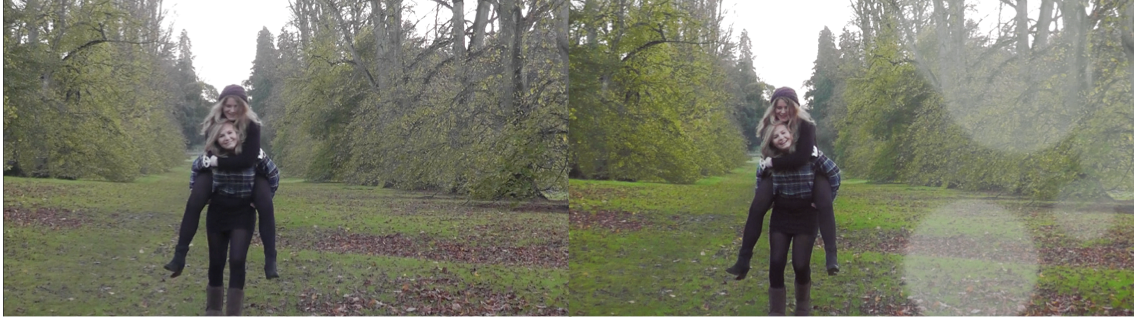
However, on the day we filmed it wasn't as sunny as we would have liked and it started to get dark. Which posed a challenge for me when editing as it meant that I had to start colour manipulating to recreate the effect that it was a sunny autumnal day using the colour board and some of the presents I managed to find an effect which managed to enhance the colour which I wanted to enhance without making it look too fake. I then used the percentages given for shadows, mid tones and highlights and put those percentages on each of the clips that I had to consistency within the video.
From these two images you can see the effect that using these setting had:
The left is before and right after, as you can see I added a sunlight effect to make the colours seem more real and give the impression that the video was filmed on a very sunny day. It also gives a sense of a home video as professionals would not want these effects which links to the first bit of the memories that we see which has the home recording effect on it.
So far we haven't had much chance to film due to jobs etc, however we plan to film quite a lot more on Thursday evening and then we will start to have a draft of our final music video.

Monday, 17 November 2014
Research: Controversial Music Videos Over The Years
Over the years there has been a drastic change in what people consider 'controversial' music videos. In this post I will be showing you some of the most controversial music videos over the years.
1980's: Girls on Film - Duran Duran
Girls on Film was Duran Duran's 3rd single released on July 13th 1981. The single became Duran Duran's Top 10 breakthrough in the UK Singles Chart, peaking at Number 5 in July 1981. The video was made with directing duo Godley & Creme at Shepperton Studios in July 1981. It was filmed just weeks before MTV was launched in the United States and before anyone knew what an impact the music channel would have on the industry.
The raunchy video created an uproar, and it was consequently banned by the BBC and heavily edited for its original run on MTV; the band unabashedly enjoyed and capitalised on the controversy.
Here are some screen shots from this so called 'controversial' music video

Personally I feel the music video overshadowed the song's message of fashion model exploitation.
The raunchy aspect is shown through possible 'sexy' situations like the pretty woman massaging the man and the mud wrestling scene.
The song is pop/rock and the video is very fitting to the genre. The band are performing throughout the video which is linked to the rock genre. Also the bands outfits are also of the pop/rock genre as they;re wearing bandanas, and tight clothing. Furthermore pop and rock bands are often associated with beautiful women which is definitely included in this video! There are numerous amounts of women scantily clad throughout the video.
When it comes to editing most shots are 2-3 seconds long, there is an establishing shot of the ban which is longer but this helps set the scene and give the audience an idea of what is going on. The editing isn't exceptionally fast paced but this fits in with the pace of the song making it more aesthetically pleasing.
The mise en scene fits with the raunchiness of the song: massage oil, mud wrestling, alcohol, which all fits in with the mood of the song
The video uses a huge range of camera shots; from close-ups, long shots, low angle shots - which are mostly used on the band and so makes them seem more powerful and having a higher status than the others in the video.
OKAY, HOLD UP, SO I ACTUALLY WATCHED THE WHOLE UNCENSORED VERSION AND HOLY MOLY NO WONDER IS WAS CONSIDERED CONTROVERSIAL!!!!! I THINK MY RETINAS ARE SCARRED.
2010's: Blurred Lines - Robin Thicke
"Blurred Lines" is a song recorded by American recording artist Robin Thicke for his 2013 album. The single peaked at number one on the US Billboard Hot R&B/Hip-Hop Songs chart, as well as topping the Billboard R&B Songs chart. It became Thicke's most successful song on the Billboard Hot 100, being his first to reach number one on the chart.
The music video was released on March 20, 2013, and was made in two versions; the first video features models Emily Ratajkowski (bit of a mouthful), Jessi M'Bengue, and Elle Evans being topless, the second features them covered. On March 30, 2013, the topless version of the video was removed from YouTube for violating the site's terms of service regarding nudity, though it was later restored, but flagged as inappropriate.
The genre of this music video is “Pop”, we get this impression through the clothing of the men and the modern day society of how stereotypical women are dressed - mise en scene. The men characters are dressed casually smart and trendy, whereas the women are dressed sexually and look inferior to the men. This music video can be controversial to the target audience as the main conventions are stereotypical to gender.

The ‘Mise en scene’ has been based in one set. The background is consistently light pink throughout the whole music video which could be a stereotype of women as the colour pink is a connotation for women. This can also be seen as feminism as this music video has been targeted at women who struggle to obtain equal rights in society.
The low angle shot is another convention of where the men look more dominant and powerful than the women. The sexual, bite lipping face the female character is making is sexual and provocative to men as the male gaze is a key aspect in this music video. The close shot of the women lighting the cigarette is another form of stereotype as women being taken for advantage.
Editing wise Thicke has used his hashtag #THICKE which is plastered across the music video. The hashtag trend is extremely popular in modern day society hence why Robin Thicke has used it. This will gain his media attention through social networking sites such as Twitter and Facebook. The hashtag will be a common trend and lead people to follow the trend

So when I compare the two videos, I do not know which one is worse. Personally I find Blurred Lines disgusting and it actually makes me want to be sick. I feel that girls on film is more subtle in the ways it portrays women, but only slightly. The women in their video aren't constantly topless.
Needless to say I did not enjoy analysing these music videos. *throws up*
Subscribe to:
Posts (Atom)