Showing posts with label Eddie Hurren. Show all posts
Showing posts with label Eddie Hurren. Show all posts
Monday, 28 April 2014

Sunday, 27 April 2014
Saturday, 26 April 2014
[Group Evaluation] Question 3: What kind of media institutions may distribute your media product and why?
MISS HILL - PLEASE CLICK THE BLUE SPIDER AT THE RIGHT HAND SIDE OF THE POST AS THEIR HAVE BEEN EMBEDDING ISSUES THEREFORE IT IS EASIER TO READ WHEN CLICKING THE SPIDER. THAAAAANKS!
What kind of media institution would distribute out thriller film? on MindMup
What kind of media institution would distribute out thriller film? on MindMup
Friday, 25 April 2014

Thursday, 24 April 2014
Wednesday, 23 April 2014
Tuesday, 22 April 2014
Friday, 28 March 2014
Tuesday, 21 January 2014
Saturday, 18 January 2014
Editing Process: our Thriller Intro Draft
To get to the stage at which we have a completed draft, we spent many weeks editing and putting together each section of footage into a sequence of around 2 minutes. Firstly, we uploaded all of the footage to Final Cut Pro X. We then went about cutting down each clip to ensure it started at the right point and ended exactly when we intended that shot to end. We first started to edit the flashback scene, of which Alex and I filmed. Alex demonstrated the 'blade tool' which allowed you to separate sections of clips, meaning we could change the order of some shots to maintain continuity. For example: when editing the sequence in which Hannah 'runs off' we had to change the order of clips as the 180 degree rule had been broken.
Because a heavy theme in our thriller is flashbacks, we explored the transitions option. We found a 'flash' transition, we think it does a good job of being symbolic of the flashback itself.

In the scene where the grandad is alone in the shack, we struggled to create a smooth and flowing sequence. We again used the blade tool in order to change the duration of certain clips to find a way of making sure each clip has a smooth and natural transition into the next. We didn't want the editing to be too fast so we went back and extended the extent of some clips, even applying slight slow motion effects to achieve this to a greater extent. We did find however, that this affected the sound of the clips; deepening and distorting the diegetic sounds.

We then worked out how to 'ditatch' the audio, meaning that we could remove it and apply other sound effects to take it's place. For example, when the grandad puts his foot onto the wooden floor, we inserted a thump sound. We found the sound too sudden and thought the clip ended too quickly, which meant the focus on this scene ended too quickly also. We therefore decided to try out the echo tool. This function allowed us to extend the feeling of this scene even into the next scene, through applying a 3 stage echo, lasting for 2.5 seconds. This also helped to develop the eerie feel that is created by the dim lighting we used.
We used sound and slow editing to create an unsettling and uneasy feel in the flashback scene in a playground. The footage is reasonably slow paced, some of which being in slow motion, slowed by up to 40%. This was heavily contrasted by our choice of music. Although the music is not fast, it has an intense, eerie and creepy feel which when partnered with slow paced footage, connotates danger and we feel makes the audience feel on edge.
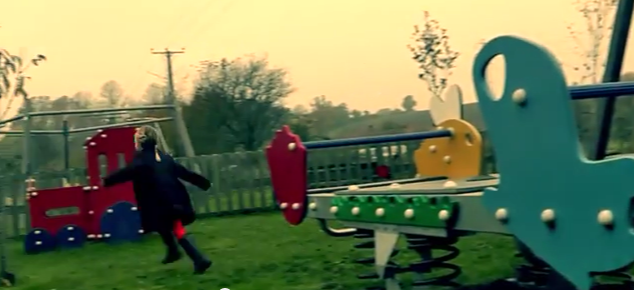

We used Final Cut's sound layering options to attempt at a tense and suspenseful atmosphere. In the sequence where the grandad is alone in his dilapidated shack, we use multiple layers of non diegetic sound, which means sound that happens off screen. We found a piece of royalty free suspense music to play subtly in the background. We adjusted the volume of this by right clicking on the sound and adjusting the sound levels of that particular layer. We then added a thunder and rain sound file, which we increased in volume. We chose this particular sound due to it's contrasting high and low points; with quiet periods and then sudden transitions into crashing thunder, this leaves audiences on edge, adding to the thriller convention of suspense.
Finally, we added the sound effect of dripping with echo. This gave the idea that his shack is old, derelict and dilapidated. This use of setting can lead the audience to believe he can't be trusted or there is something about his persona that may not be quite 'right.'
In the scene where the grandad is alone in the shack, we struggled to create a smooth and flowing sequence. We again used the blade tool in order to change the duration of certain clips to find a way of making sure each clip has a smooth and natural transition into the next. We didn't want the editing to be too fast so we went back and extended the extent of some clips, even applying slight slow motion effects to achieve this to a greater extent. We did find however, that this affected the sound of the clips; deepening and distorting the diegetic sounds.
We then worked out how to 'ditatch' the audio, meaning that we could remove it and apply other sound effects to take it's place. For example, when the grandad puts his foot onto the wooden floor, we inserted a thump sound. We found the sound too sudden and thought the clip ended too quickly, which meant the focus on this scene ended too quickly also. We therefore decided to try out the echo tool. This function allowed us to extend the feeling of this scene even into the next scene, through applying a 3 stage echo, lasting for 2.5 seconds. This also helped to develop the eerie feel that is created by the dim lighting we used.
We used sound and slow editing to create an unsettling and uneasy feel in the flashback scene in a playground. The footage is reasonably slow paced, some of which being in slow motion, slowed by up to 40%. This was heavily contrasted by our choice of music. Although the music is not fast, it has an intense, eerie and creepy feel which when partnered with slow paced footage, connotates danger and we feel makes the audience feel on edge.
One final thing we considered before handing in our draft was the stability of our clips. Some shots were not taken with a tripod because of the awkward angles at which we shot for effect. This turned out to be much less of a problem as we thought due to us finding the 'clip stabilization' option. We applied clip zoom stabilization to the shot where the camera zooms very slowly into the articles, and pan stabilization to the shot in which we see a pan from the grandad to the girl. Luckily the majority of our footage was captured with the use of a tripod because stabilizing clips took hours, even before the rendering process. However we managed our time by ensuring that all necessary changes were made before we started the rendering process.
We used Final Cut's sound layering options to attempt at a tense and suspenseful atmosphere. In the sequence where the grandad is alone in his dilapidated shack, we use multiple layers of non diegetic sound, which means sound that happens off screen. We found a piece of royalty free suspense music to play subtly in the background. We adjusted the volume of this by right clicking on the sound and adjusting the sound levels of that particular layer. We then added a thunder and rain sound file, which we increased in volume. We chose this particular sound due to it's contrasting high and low points; with quiet periods and then sudden transitions into crashing thunder, this leaves audiences on edge, adding to the thriller convention of suspense.
Finally, we added the sound effect of dripping with echo. This gave the idea that his shack is old, derelict and dilapidated. This use of setting can lead the audience to believe he can't be trusted or there is something about his persona that may not be quite 'right.'
Wednesday, 1 January 2014
Use of Sound: Research and Incorporation into our Thriller
TYPES OF SOUND
Diegetic Sound: Sound that occurs within the fictional world, in which the film explores. For example, if someone screams in the film, their scream is diegetic sound, because it is sound in consequence of an action or happening within the story. This sound does not have to be recorded on set, it can be added in the editing stages.
Non Diegetic Sound: Sound that doesn't happen within the fictional story, often music is used to add feeling or create a certain atmosphere, this is an example of non diegetic sound because the characters are not hearing what we hear and it doesn't affect them, only the audience.
On Screen: Sound that can be traced back to it's source, which is on the screen. For example if an alarm went off and we could see the alarm in the shot, this is on screen (diegetic) sound.
Off Screen: Sound that is happening outside of the shot. This sound remains diegetic however, due to it happening inside the fictional story. For example, if a scene faded to black or switched angle and you hear the gunshot but cannot see the murderer, this is Off Screen (diegetic) sound.
Parallel: Sound that enhances, emphasizes or compliments what is happening on screen. For example, in 'Jaws' the tense build up music signifies the incoming of danger and heightens tension/suspense, in relation to the image of a shark.
Diegetic Sound: Sound that occurs within the fictional world, in which the film explores. For example, if someone screams in the film, their scream is diegetic sound, because it is sound in consequence of an action or happening within the story. This sound does not have to be recorded on set, it can be added in the editing stages.
Non Diegetic Sound: Sound that doesn't happen within the fictional story, often music is used to add feeling or create a certain atmosphere, this is an example of non diegetic sound because the characters are not hearing what we hear and it doesn't affect them, only the audience.
On Screen: Sound that can be traced back to it's source, which is on the screen. For example if an alarm went off and we could see the alarm in the shot, this is on screen (diegetic) sound.
Off Screen: Sound that is happening outside of the shot. This sound remains diegetic however, due to it happening inside the fictional story. For example, if a scene faded to black or switched angle and you hear the gunshot but cannot see the murderer, this is Off Screen (diegetic) sound.
Parallel: Sound that enhances, emphasizes or compliments what is happening on screen. For example, in 'Jaws' the tense build up music signifies the incoming of danger and heightens tension/suspense, in relation to the image of a shark.
Wednesday, 18 December 2013
Wednesday, 11 December 2013
Thursday, 5 December 2013

Wednesday, 4 December 2013
Editing: Draft Edit
After our two days of filming we decided to start editing, with the use of Final Cut Pro 10. We started importing the clips and slowly began to cut them down and rearrange into our planned sequences. For the first scene which is a flashback, we used a dark and contrasting effect which creates a grungy and dark feel, alluring a tense atmosphere and deep/dark connotations. The effect also adds to the dilapidated look of the outhouse due to shadows being even larger and darker. We used a low angle shot, looking up to the granddad which conceals the newspaper and what he is 'ripping out'. It also conveys a sense of power as we are looking up to him.

In the main sequence of the thriller intro, we used a 'Teal and Orange' theme which gives a sense of surrealism leading to a calming yet creepy feel. We used copyright free thriller music which also creates a creepy feel, whilst maintaining a calming and sombre atmosphere simultaneously.

In the main sequence we used a 'over the shoulder' shot which shows what both characters are doing at the same time. The granddad is writing in his diary and the girl playing, the focus on this scene foreshadows that something could happen to Hannah due to focus on the granddad's lack of attention shown to her.

We decided to feature the super close up in our intro because it is effective in showing that maybe the granddad is not all 'good,' therefore creating an enigma code. His facial expression is quite 'creepy' and abnormal. Because of the extent at which we focus on his face, audiences will ask whether they should trust him or not. We chose the Granddad with facial hair which conceals part of his face because this can result in him being seen as less trustworthy and maybe a 'bad' character.

Friday, 29 November 2013
Wednesday, 27 November 2013
Research:Past Student Work:Perception


The first sequence incorporates multiple shots, panning around the girl. Although this creates a 'creepy' effect, it could be seen as disjointed due to the short time at which each shot is maintained. The shot switches before we have a real chance to view it/ take it in.
I like the way a reverse effect is used on the third scene, adding to the creepy feel. Also with different (brighter) lighting with a subtle sepia effect used to show a different time frame. However, he appears to be walking backwards, it would be more effective to film in real time/forwards, then apply a reverse effect to ensure continuity. This is because he puts his hand on the wrong side of the door handle when trying to walk backwards.
A heartbeat sound affect is used to aid transition from one scene to the next. The shot flashes to black before each new scene, this means we can't tell what is going to happen. This concealment of information is a key thriller conventions. Due to the sudden nature at which she is up close to him, audiences are startled and a tense atmosphere is created, this is affective in thrillers and adds to the air of suspense.
I like the way piercing and sharp music is used as she is opening the door, gradually getting louder and climaxing as she touches the door handle. The music suddenly stops, followed by complete silence. This adds emphasis and ensures maximum concentration on the subject of what is about to happen.
Friday, 22 November 2013
Research: Thriller Openings- Team 7 productions- The Therapist


The next shot is of the boy's whole body, and over the shoulder (front on) shot which tells the audience that he is being followed, but the character does not know. This technique of dramatic irony allows the audience to be emotionally involved in the story and understand completely. It also adds an extra twist because we feel different emotions to him, we are scared for him but he is oblivious. This technique is narrative retardation, because information is held back from the character. The man is wearing all black and his face is hidden. Team 7 productions took into account Mise En Scene whilst creating this scene, the black clothes suggest a dark or evil element to his character and has very negative connotations. This ensures that we don't trust him and we associate him with danger.
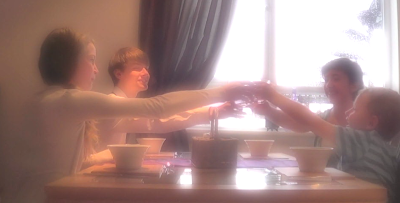
Towards the conclusion of the opening, scenes cut in and out with the transition of a black screen. One scene is of the family in bright lighting with a red glow, to induce happy and peaceful emotions, the scene then rapidly cuts to a dark shot of them in the woods. The boy's facial expression in the dark scene is riddled with panic and distress. The way one scene cuts from the next creates stark contrast and the happy juxtaposes the dark and evil. We can see just how happy he is in one scene, resulting in the emphasis of just how bad his situation is, in the dark scene. By seeing the good, this enables us to see the bad in a more severe light due to the contrast.
The sound effect of a heartbeat is used to good effect, creating suspense and adding an extra dimension to the atmosphere; one of tension and mystery. Music is barely used in the thriller opening, I think it could be more effective if more was used to mark the character's emotions and to highlight the panic that he feels. For example, music with clashing notes could be used at a high volume to form a more suspenseful atmosphere. The silence used in certain scenes is effective because it allows for added attention to be payed to footsteps and other diegetic sounds which (by themselves) create tension.
Thursday, 21 November 2013
Thursday, 14 November 2013
Research: Our Survey
Please take our survey below, Thank you :)
https://www.surveymonkey.com/s/VT98HZ5
https://www.surveymonkey.com/s/VT98HZ5
Subscribe to:
Posts (Atom)